
While elderly home care services often focus on mobility support, meal preparation, medication reminders, and safety, true person-centered care must go deeper.
Families seeking private caregiver support for aging loved ones — especially those managing chronic conditions at home — want more than task completion. They want dignity preserved, emotional awareness, compassionate presence alongside clinical competence.
At My Home Health Care Consultants, we believe that person-centered elderly home care must honor the whole person — not just the diagnosis. In other words, in-home care for seniors is about far more than assistance with daily living.
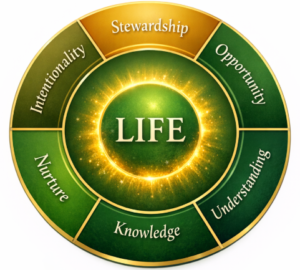
That belief led to the development of SOULINK™, a structured framework guiding holistic in-home care for seniors and individuals living with chronic illness.
SOULINK is not a program.
It is not a scripted method.
On the contrary, it is a disciplined approach to caregiving.
It ensures that elderly home care services are delivered with skill, ethical responsibility, and intentional human connection.
What Is SOULINK?
SOULINK is an acronym representing the seven foundational pillars of this holistic home care philosophy:
- S – Stewardship
- O – Opportunity
- U – Understanding
- L – Life (Center)
- I – Intentionality
- N – Nurture
- K – Knowledge
Together, these principles shape how care is delivered in the home — particularly for seniors living with chronic conditions such as dementia, Parkinson’s disease, diabetes, mobility limitations, stroke recovery, and end-of-life transitions.
At its core, SOULINK is built on one central discipline:
Understanding Life with Intentionality.
This core discipline transforms caregiving from mechanical duty into meaningful service.
S – Stewardship
In-home caregiver support is a position of trust.
When families invite a caregiver into their home, they are entrusting that professional with more than physical tasks. They are entrusting safety, privacy, dignity, and emotional vulnerability.
Stewardship means:
- Maintaining confidentiality
- Protecting physical safety
- Observing subtle health changes
- Acting ethically and responsibly
- Preserving personal dignity during intimate care
For seniors managing chronic illness at home, stewardship becomes even more critical. Many individuals feel a loss of independence. A responsible caregiver recognizes that preserving autonomy wherever possible is essential to emotional well-being.
Stewardship is the foundation of person-centered elderly home care.
O – Opportunity
Every interaction in elderly home care services presents an opportunity.
An opportunity to:
- Encourage mobility safely
- Improve nutritional intake
- Monitor symptoms
- Offer reassurance
- Support cognitive engagement
- Reinforce self-worth
For seniors with dementia or Parkinson’s disease, small moments matter. A calm redirection during confusion. A patient pause during mobility support. A gentle tone during personal care.
In chronic condition management at home, the difference between routine care and meaningful care often lies in recognizing opportunity within ordinary tasks.
SOULINK teaches caregivers to remain observant — because opportunity often appears quietly.
U – Understanding
Understanding goes beyond following a care plan.
In holistic elderly home care, understanding includes:
- Listening actively
- Recognizing emotional patterns
- Respecting cultural background
- Honoring spiritual beliefs
- Acknowledging life history
- Identifying fear or grief beneath behavior
For example, a senior living with diabetes may struggle emotionally with dietary restrictions. A client receiving hospice support at home may carry unspoken fears about end-of-life transitions. A stroke survivor may experience frustration over lost independence.
Understanding allows private caregiver support to become empathetic rather than mechanical.
It prevents misinterpretation of behavior.
It builds trust.
It reduces anxiety.
It strengthens caregiver-client rapport.
Without understanding, care becomes procedural.
With understanding, care becomes relational.
L – Life (Center)
In many healthcare settings, diagnosis becomes the focus.
SOULINK re-centers care on life.
Not illness.
Not limitation.
Not decline.
Life includes:
- Memories
- Values
- Identity
- Beliefs
- Relationships
- Purpose
Person-centered elderly home care acknowledges that a senior with dementia is still a whole person with a lifetime of experiences. A client with Parkinson’s disease is more than tremors. A hospice patient is more than a prognosis.
Placing life at the center changes the tone of caregiving.
Conversations become more meaningful.
Activities become more personalized.
Care becomes individualized rather than standardized.
This is the essence of holistic in-home care for seniors.
I – Intentionality
Intentionality is what prevents burnout, impatience, and detachment in caregiving.
Intentionality means:
- Choosing tone carefully
- Being aware of body language
- Adjusting pace for comfort
- Creating calm environments
- Responding rather than reacting
For families seeking private caregiver support, intentionality provides reassurance that their loved one is treated with patience and respect.
In chronic condition management at home, intentional care reduces stress for both client and family members. It fosters emotional stability in environments that may otherwise feel uncertain.
Intentionality is not accidental kindness.
It is conscious, disciplined awareness.
N – Nurture
Elderly home care services should promote safety — but they should also promote emotional comfort.
Nurture includes:
- Encouragement
- Gentle reassurance
- Positive reinforcement
- Maintaining familiar routines
- Supporting emotional expression
- Offering companionship for seniors living alone
Many seniors receiving in-home care experience isolation. Companion care for seniors is not a luxury — it is often essential to mental well-being.
For clients living with dementia, nurturing communication reduces agitation. For individuals receiving hospice support at home, emotional presence brings peace.
Nurture strengthens resilience.
It creates environments where seniors feel valued rather than burdensome.
K – Knowledge
Compassion alone is not sufficient in professional elderly home care services.
Knowledge includes:
- Infection control practices
- Chronic disease awareness
- Safe transfer techniques
- Vital sign monitoring
- Diabetic care support
- Understanding Parkinson’s mobility challenges
- Dementia behavior management strategies
- Hospice comfort care awareness
Families seeking in-home caregiver support need assurance that their loved one is in capable hands.
Knowledge builds credibility, improves safety, and reduces preventable complications.
SOULINK integrates both heart and skill — because holistic care requires both.
Holistic In-Home Care for Seniors with Chronic Conditions
As more families choose aging in place, the need for person-centered elderly home care continues to grow.
Seniors living with chronic conditions such as:
- Alzheimer’s disease and dementia
- Parkinson’s disease
- Diabetes
- Stroke recovery
- Heart disease
- Mobility limitations
- End-of-life transitions
require care that addresses both physical and emotional dimensions.
Traditional home care may focus on physical assistance.
SOULINK enhances that care by integrating:
- Emotional awareness
- Intentional communication
- Faith-sensitive support when welcomed
- Observational attentiveness
- Holistic well-being
Chronic illness management at home is not only about symptom control. It is about preserving quality of life.
SOULINK strengthens elderly home care services by ensuring that quality of life remains central.

The Core Discipline: Understanding Life with Intentionality
At the heart of SOULINK is a guiding principle:
Understanding Life with Intentionality.
This means:
- Seeing beyond symptoms.
- Listening beyond words.
- Supporting beyond tasks.
- Acting with awareness of impact.
- Preserving dignity in every interaction.
Understanding Life with Intentionality ensures that in-home care for seniors remains compassionate, ethical, and person-centered.
It reminds caregivers that each client’s story matters.
A Living Framework for Modern Elderly Home Care
SOULINK is not theoretical.
It is practiced:
- During safe transfers from bed to chair.
- While preparing diabetic-friendly meals.
- When offering companionship during quiet afternoons.
- During hospice support at home.
- When assisting with bathing while protecting modesty.
- When calming anxiety in dementia care at home.
It guides how care is delivered — not just what is delivered.
Families seeking private caregiver support often want reassurance that their loved one is treated as an individual, not a checklist.
SOULINK provides that reassurance.
In practice, SOULINK isn’t abstract — it shapes every aspect of how we support aging in place, chronic illness management, and one-on-one caregiver support. See specific services we offer through our private duty caregiving services that reflect these principles.
Moving Forward with Purpose
Healthcare continues to evolve. Families increasingly seek elderly home care services that combine clinical awareness with compassionate presence.
Person-centered elderly home care must:
- Preserve dignity
- Respect autonomy
- Support emotional health
- Manage chronic conditions safely
- Provide reliable in-home caregiver support
SOULINK reflects our commitment to all of these.
It affirms that:
- Caregiving is stewardship.
- Opportunity exists in every interaction.
- Understanding prevents detachment.
- Life remains central.
- Intentionality transforms environments.
- Nurture builds resilience.
- Knowledge safeguards well-being.
And above all, that seniors deserve to be seen, heard, and valued — not only for their needs, but for their lives.
If you’d like in-home care that aligns with the SOULINK philosophy — combining skill with intentional presence — consider our private duty caregiving services designed for seniors and individuals with chronic conditions.
SOULINK™ is a proprietary framework developed by Veron Lee Campbell under The Way 4Word Enterprises, guiding purposeful living, meaningful interactions, and intentional service.
Veron Percy-Jarrett | Caregiver with over 19 years’ experience
Toll-free: 1 (888) 670-6053 | veron@theway4word.com